HKU Unveils Groundbreaking Pavilion Featuring 1,000 3D Printed Clay Bricks
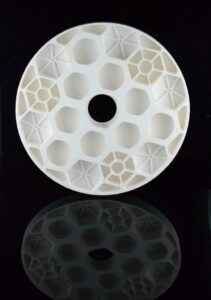
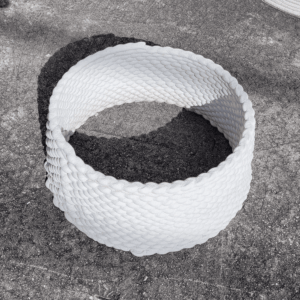
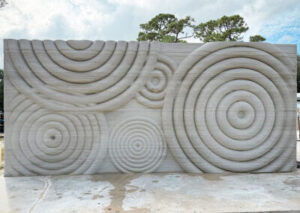
Researchers at the University of Hong Kong have unveiled an innovative architectural pavilion constructed from one thousand unique 3D printed clay structures. This milestone highlights the growing intersection of robotic fabrication, traditional ceramics, and sustainable design.
Published: February 22, 2018 • Original report: 2018-02-19

Researchers at the University of Hong Kong (HKU) have pushed the boundaries of ceramic additive manufacturing with the public debut of a striking new architectural pavilion. Composed of one thousand distinct 3D printed clay elements, this installation showcases the immense potential of computational design combined with traditional earthen materials in modern construction.
As the architectural world increasingly turns toward sustainable and locally sourced materials, projects like HKU’s pavilion demonstrate how digital fabrication can transform ancient mediums into complex, high-performance structures. By leveraging robotic printing technologies, the design team was able to produce a multitude of custom geometries that would be virtually impossible to achieve through conventional manufacturing methods.

Key Highlights & Specifications
- Project Scale: Comprises a total of 1,000 individually designed 3D printed clay structures.
- Institution: Developed by researchers and designers at the University of Hong Kong (HKU).
- Medium: Utilizes clay as the primary sustainable building material for advanced architectural application.
Digital Workflow and Material Execution
The creation of the pavilion relies heavily on advanced digital workflows and robotic extrusion systems tailored for ceramic materials. Earthen mixtures are precisely deposited layer by layer, allowing creators to program complex internal lattices, varied porosities, and intricate surface textures directly into the digital model before the physical printing phase begins.
Implications for Ceramic Artists and Earthen Architects
This exhibition serves as a significant milestone for the 3D clay printing community, offering valuable insights for ceramic artists, industrial designers, and forward-thinking architects. By scaling up robotic clay fabrication to the architectural level, the HKU project proves that earthen materials can be utilized to construct structurally ambitious, aesthetically compelling, and environmentally sustainable spaces for the future.