KERAMIK Blends Ancient Clay Craft with 3D Printing Innovation
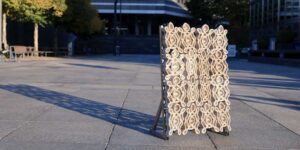
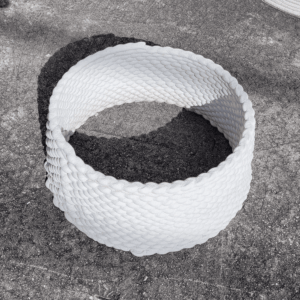
Greek design studio KERAMIK is merging digital 3D printing technology with traditional clay crafting to produce eco-friendly furniture, lighting, and accessories.
Published: March 12, 2023 • Original report: 2023-03-09

Merging Ancient Roots with Digital Fabrication
The ancient Greek term ‘Kerameikos’—the historic root of the word ‘ceramics’ and the art of firing clay—serves as the foundational inspiration for KERAMIK. Established as a specialized initiative by Framed Visualisation, a 3D design architectural office founded by Theodore Samaras in 2014, the studio has spent nearly a decade providing professional design and photorealistic rendering services. Building upon this extensive digital background, the team sought to explore the next evolutionary phase of their creative work.
Driven by an ethical commitment to sustainability and eco-friendliness, Marketing Director Elli Saravelou and her team engaged in comprehensive discussions with various material 3D printer manufacturers. This exploration ultimately led them to embrace clay additive manufacturing. By turning to earth-based media, the studio launched a dedicated collection of eco-friendly lighting fixtures, functional furniture, and decorative accessories tailored for both indoor and outdoor environments.
Key Highlights & Specifications
- Origin: Created by Greek design studio KERAMIK, an initiative of Framed Visualisation founded in 2014 by Theodore Samaras.
- Primary Medium: Eco-friendly, raw, and natural clay.
- Product Portfolio: Sustainable lighting products, functional furniture, and bespoke accessories.
- Application Scope: Designed for both indoor and outdoor use, fully adaptable to individual client aesthetics.
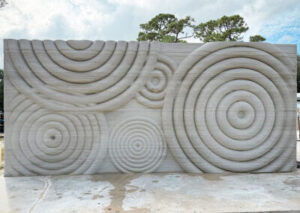
- Design Capability: Enables complex geometric forms unattainable through traditional ceramic hand-building or wheel-throwing techniques.
Mechanics of the Extrusion Process and Digital Workflow
The production workflow begins in the digital realm, leveraging the architectural office’s decade-long expertise in 3D design and visualization. Once a concept is fully rendered and optimized digitally, it is translated into toolpaths suitable for ceramic extrusion. The physical fabrication relies on specialized clay 3D printers capable of managing raw earth materials. By layering natural clay continuously, the machinery builds up complex forms systematically, turning a fluid digital model into a tactile, enduring physical structure before the final firing stage.
Why It Matters for Ceramic & Clay 3D Printing
This intersection of historical materials and modern digital tools opens up entirely new horizons for ceramic artists, architects, and forward-thinking makers. Transforming a raw, elemental ingredient like clay into precise digital geometries bridges thousands of years of human craftsmanship with contemporary manufacturing efficiency. For the design and architecture space, this approach offers sustainable, durable solutions that respect the environment while pushing the boundaries of what is aesthetically and structurally possible with ceramic mediums.
Source & Project Documentation
Primary Sources:
Related Links & Files: