CeraShingle: Studio WE’s Dynamic 3D Printed Ceramic Cladding System
Studio WE introduces CeraShingle, a modular, 3D printed ceramic cladding system that utilizes computational design to create light-reactive architectural facades. These sustainable, custom-textured shingles offer a scalable alternative to traditional, minimalist building materials.
Published: May 22, 2026 • Original report: 2026-05-19

Reviving Architectural Ornamentation with Robotic Clay Printing
Modern architecture is often critiqued for its sterile, minimalist aesthetics and lack of ornamentation. Los Angeles-based design firm Studio WE, led by founders Yutao Chen and Yiwen Gu, is challenging this trend with CeraShingle, a sophisticated 3D printed ceramic cladding system. By blending computational design with robotic additive manufacturing, the team has developed a modular solution that prioritizes both aesthetic depth and practical building performance.
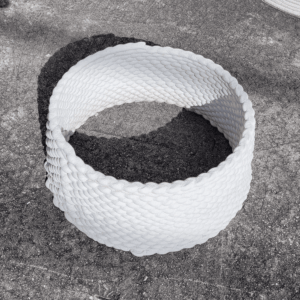
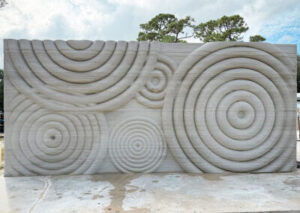
The CeraShingle system is designed to transform static facades into dynamic, light-reactive surfaces. Through the use of varied textures—ranging from vertical ridges to knit-like bumpy patterns and wavy geometries—the shingles manipulate sunlight throughout the day. This interaction produces a shifting array of shadows and highlights, imbuing the building envelope with a sense of movement and visual complexity that is rarely achieved with traditional mass-produced masonry.
Key Highlights & Specifications
- Dimensions: Each rectangular shingle unit measures approximately 400 x 130 mm.
- Weight: Individual units weigh just over one kilogram.
- Design Language: Features a gradient of textures, including wavy shapes, vertical ridges, and knit-like surfacing.
- Installation Mechanics: Integrated hook-style overlaps allow for secure assembly and a visually seamless, woven appearance.
- Maintenance: Modular design allows for the individual replacement of damaged tiles without compromising the entire facade.
- Sustainability Factors: Utilizes locally sourced clays to reduce logistics-related carbon emissions and incorporates low-temperature glazes to minimize energy consumption during production.
The Process: From Computational Design to Robotic Extrusion
The creation of CeraShingle is a testament to the synergy between digital design and material science. Studio WE utilizes computational algorithms to generate complex surface geometries that would be prohibitively expensive or impossible to craft using traditional slip-casting or press-molding methods. Once the digital model is perfected, robotic 3D printers deposit local clay mixtures with high precision, maintaining the intricate ridges and textures specified in the design phase.
Following the printing process, the shingles are finished with low-temperature glazes. This specific choice of material processing is critical to the project’s sustainability goals, as it significantly lowers the energy footprint typically associated with high-fire ceramic production. The workflow is optimized for scalability, ensuring that the benefits of bespoke, ornamental ceramic design can be applied to real-world, large-scale construction projects.
Architectural Significance in the Ceramic Sector
CeraShingle represents a pivotal shift in how architects approach ceramic cladding. By moving beyond the limitations of flat, uniform tiles, designers can now achieve a higher level of material expression and surface depth. This capability aligns with the broader industry evolution seen in firms like Studio RAP, which has successfully pushed the boundaries of custom 3D printed facades on a global scale.
For ceramic artists and architects alike, the CeraShingle system provides a balance between efficiency and individual creativity. It proves that additive manufacturing does not have to be restricted to experimental prototypes; rather, it can serve as a robust, scalable system that meets the aesthetic and functional requirements of contemporary architecture while reducing material waste and transport-heavy supply chains.
Source & Project Documentation
Primary Sources: