UVA Researchers Pioneer Living Soil 3D Printing for Carbon-Negative Homes
Researchers at the University of Virginia have developed a method to 3D print living soil structures embedded with seeds to create carbon-absorbing architecture. This sustainable alternative aims to replace high-impact traditional materials like concrete with recyclable, bio-active matter.
Published: September 10, 2022 • Original report: 2022-09-07

A New Frontier for Living Architecture
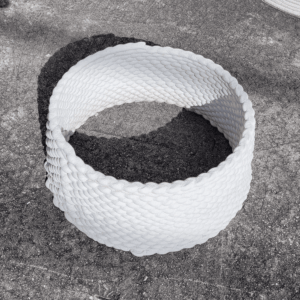
Researchers at the University of Virginia (UVA) are challenging the environmental status quo of modern construction by developing a novel method for 3D printing living soil. Led by Assistant Professors Ehsan Baharlou and Ji Ma, this initiative explores the potential for buildings that do not merely house occupants, but actively function as carbon-sequestering ecological systems. By extruding a seed-impregnated soil mixture, the team is creating self-supporting, plant-infused structures that promise a greener future for earthen architecture.
The project represents a significant departure from traditional, resource-intensive construction methods. Because the ‘ink’ used in this process is entirely natural and recyclable, any structures that fail to meet quality standards or are no longer needed can be broken down and reused in subsequent print cycles. The only energy input required is electricity to power the robotic pumps and movement, making this a low-impact solution compared to the energy-heavy production of cement and concrete.
Key Highlights & Specifications
- Material Composition: A custom mixture of soil and plant seeds, with ongoing experiments incorporating additional botanicals like hemp.
- Plant Selection: Researchers utilize ‘stonecrop,’ a resilient plant species known for thriving in minimal water and growing directly on exposed rock.
- Print Hardware: Utilizes a robotic arm equipped with a 3- to 4-foot reach, allowing for the construction of complex, large-scale geometries.
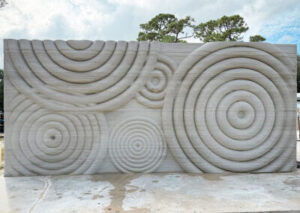
- Structural Capacity: Capable of printing low walls reaching approximately one meter in height with successful plant germination within days.
- Sustainability Goal: To create carbon-negative architecture that absorbs CO2 via photosynthesis and reduces reliance on environmentally taxing aggregates.
The Process: Extrusion and Ecological Integration
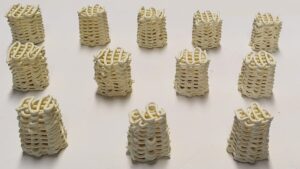
The team’s workflow involves formulating a soil-based ink that serves as both a structural medium and a growth substrate. Early experiments compared two strategies: printing soil and seeds in sequential layers versus blending them prior to extrusion. The researchers discovered that the extrusion process significantly alters the soil’s physical properties. As the material passes through the nozzle, the pressure forces out air bubbles, leading to a more compacted state that retains moisture more effectively—a vital factor for supporting life within the walls.
Scaling the technology required solving the challenge of soil cracking in taller structures. By employing a robotic arm system, the team can precisely control the geometry of the prints. The current focus remains on identifying the optimal material blend that maintains structural integrity while maximizing the biological benefits of the incorporated seeds.
Why It Matters: Rethinking Ceramic and Soil Additive Manufacturing
For the world of clay printing and ceramic manufacturing, this research opens doors to ‘living’ ceramics. While traditional ceramic printing focuses on thermal firing for permanence, this work highlights the utility of air-dried, bio-active earth as a construction material. It offers a practical answer to the massive carbon footprint of the global concrete industry, where the environmental cost of sand and gravel extraction often exceeds the forest’s capacity to offset the resulting CO2 emissions.
This method provides a template for architects and artists to view additive manufacturing not just as a fabrication tool, but as a system for ecological restoration. As research continues to advance—joining other sustainable breakthroughs like ‘hempcrete’ and fungal-based architecture—the prospect of carbon-capturing buildings is becoming an increasingly tangible reality for the next generation of builders and designers.
Source & Project Documentation
Primary Sources: