Exploring Ceramic & Clay 3D Printing in Consumer Products
Discover how technical and traditional ceramics are shaping the world of 3D printing, from high-end luxury items to artisanal clay creations and advanced additive manufacturing workflows.
Published: July 20, 2024 • Original report: 2024-07-17

Navigating the Landscape of Ceramic Additive Manufacturing
The application of ceramics within the 3D printing of consumer goods represents a specialized niche positioned inside a sector holding immense growth potential. When evaluating the scope of ceramic additive manufacturing, industry professionals generally divide the field into two distinct categories: technical ceramics such as alumina, zirconia, and silicon carbide, and traditional ceramics encompassing sand, clay, and concrete. While both branches yield high-value prototypes, tooling, and functional parts, technical variants are typically utilized in small to medium quantities ranging from a few grams up to several kilograms. Conversely, traditional materials scale from medium volumes to massive infrastructural proportions.
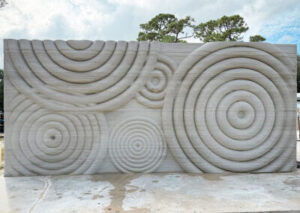
Technical ceramics like zirconia and alumina excel in extreme environments, offering extraordinary melting points, chemical resistance, and mechanical strength. Zirconia, frequently dubbed ‘ceramic steel,’ finds a home in luxury watches, jewelry, and precision cutting tools. Meanwhile, traditional media such as clay, sand, and concrete dominate the consumer and architectural spaces. From binder-jetted sand lamps and architectural elements to paste-extruded earthenware and porcelain tableware, additive manufacturing is redefining how makers, ceramic artists, and designers approach traditional earthen mediums.
Key Highlights & Specifications
- Alumina (Al2O3): Possesses a melting point of 2,072°C, featuring high flexural strength, wear resistance, electrical insulation, and chemical stability, commonly used in high-end electronics and telecommunications.
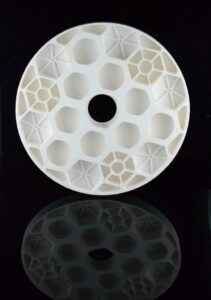
- Zirconia (ZrO2): Boasts a melting point of 2,715°C, exceptional fracture resistance, low thermal conductivity, and non-magnetic traits, making it ideal for luxury goods and abrasive tools.
- Silica and Quartz Sands: Feature melting points around 1,750°C, utilized primarily in binder jetting to create large-scale decorative objects, statues, and thermal-storing bathroom applications.
- Clay Varieties: Earthenware, stoneware, and porcelain optimized for 3D printing through water content regulation, enhanced by clinker additives to improve structural viscosity.
- Material Shrinkage: Clay objects experience volumetric contraction during the drying phase and further shrinkage during kiln firing, with vertical shrinkage typically exceeding horizontal contraction.
Material Extrusion, Powder Processing, and Workflow Dynamics
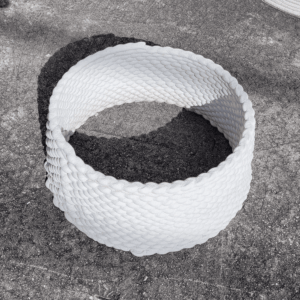
The operational workflow of ceramic 3D printing heavily depends on whether the chosen medium is a technical oxide, a particulate sand, or a plastic clay body. For paste-based clay systems, standard pottery clay is carefully optimized with precise water content to ensure it remains soft enough to feed smoothly through pneumatic or mechanical tamping extrusion setups, yet firm enough to support subsequent layers without sagging or collapsing. In contrast, powder-based approaches utilize binder jetting technology. Specialized suppliers like Tethon 3D provide powdered ceramic formulations under the Tethonite brand—including earthenware, stoneware, porcelain, and aluminum-based mullite—allowing industrial binder jetting systems to selectively cure layers of powder before post-processing and kiln sintering.
Material selection dictates the final physical properties of the printed object. Earthenware, including terracotta, remains porous even after firing unless glazed, making it suitable for traditional vessels and bricks. Stoneware is fired at elevated temperatures to achieve nonporous, durable results, often carrying natural impurities that yield earthy tones. Porcelain requires kiln temperatures ranging between 1,200°C and 1,400°C to trigger vitrification and form the mineral mullite, producing a remarkably strong, translucent, and resonant final product. Managing the moisture balance, avoiding delamination, and calculating precise thermal shrinkage rates remain critical technical considerations throughout the entire prepress and printing workflow.
Why It Matters for Ceramic Artists, Architects, and Makers
For modern ceramicists, studio artists, and industrial designers, additive manufacturing unlocks unprecedented geometric freedom that traditional wheel-throwing and slip-casting cannot easily achieve. The ability to directly translate complex digital models into physical earthenware, stoneware, or porcelain objects opens up entirely new avenues for bespoke tableware, intricate interior lighting, artistic home decor, and complex architectural tiles. By leveraging optimized clay pastes and specialized binder jetting powders, creators can bypass the limitations of traditional molds while retaining the authentic haptic qualities and tactile warmth of natural ceramics.
At the same time, the distinct physical behaviors of printed clay—such as anisotropic shrinkage and the structural reinforcement provided by clinker additives—encourage a deeper material understanding among makers. As accessibility to reliable extrusion hardware and specialized ceramic powders continues to expand, the barrier to entry lowers for independent studios and architectural firms alike. This bridges ancient ceramic traditions with cutting-edge digital fabrication, empowering a new generation of creators to push the boundaries of earthen form and functional design.
Source & Project Documentation
Primary Sources: