Raphaël Emine 3D Prints Ceramic Insect Habitats with WASP
French artist Raphaël Emine has combined traditional ceramics with WASP 3D clay printing technology to create intricate, eco-friendly habitats for insects and plants. His Utopies entomologiques series is now on perennial display in Paris, showcasing how additive manufacturing can support urban biodiversity.
Published: February 7, 2025 • Original report: 2025-02-04

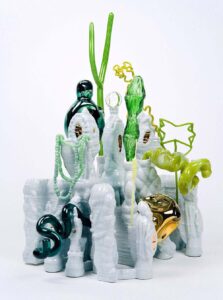
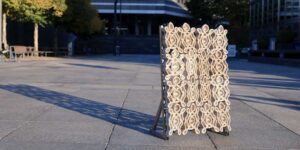
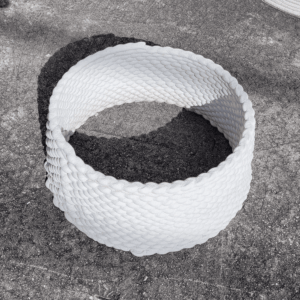
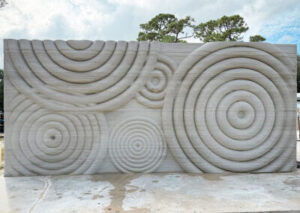
While 3D printing is increasingly recognized for its potential to construct full-scale homes for humans, the technology is now being adapted to shelter much smaller inhabitants. French sculptor and ceramicist Raphaël Emine has turned to ceramic additive manufacturing to produce a series of intricate sculptures designed specifically to house insects and other small organisms. Titled Utopies entomologiques, the collection merges traditional clay modeling with advanced 3D printing to create living, functional artworks.
Backyard and urban insect homes—commonly known as bug hotels—have grown in popularity as a way to support local biodiversity. Typically constructed from wood with simple drilled holes and tubes, these structures provide basic shelter for burrowing species. Emine’s creations elevate this concept, transforming functional, eco-friendly habitats into complex architectural sculptures. Currently on perennial display in Paris, the pieces are designed so that the surrounding environment can gradually grow around them, allowing insects, moss, and plants to thrive together.
To bring these organic forms to life, Emine partnered with Italian 3D printing manufacturer WASP. By integrating digital fabrication into his studio workflow, the artist was able to realize geometries that mirror the complexity of the natural world while maintaining the ecological benefits of raw, fired ceramics.
Key Highlights & Specifications
- Artist & Series: French ceramicist Raphaël Emine; Utopies entomologiques series, on perennial display in Paris.
- 3D Printers Used: WASP 40100 LDM (large-format system) and Delta WASP 2040 Clay (compact ceramic printer).
- Build Capacity: The WASP 40100 LDM is capable of printing ceramic parts up to one meter in height.
- Supported Materials: Clay, stoneware, porcelain, and earthenware.
- Feeding System: WASP Continuous Feeding System, enabling uninterrupted printing without mid-print tank or cartridge replacements.
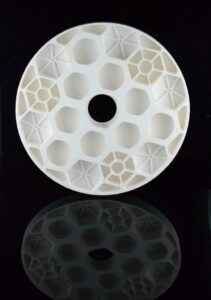
- Design Inspiration: Honeycombs, spider webs, mineral formations, plant fractals, mathematical principles, and miniature architectural features like tunnels, corridors, and balconies.
- Related Installation: The Nests, a separate WASP-printed project resembling wasp nests, installed on dead palm trees at Parc Maison Blanche in Marseille to aid pollination and pest control.
Blending Clay Extrusion with Organic Design
Emine’s production workflow relied on two distinct Liquid Deposition Modeling (LDM) machines from WASP. For larger sculptural elements, the artist utilized the WASP 40100 LDM, a large-format printer engineered to extrude clay, stoneware, porcelain, and earthenware up to a full meter in height. For smaller components, he turned to the Delta WASP 2040 Clay, a more compact system built for a similar range of ceramic materials.
A critical component of the fabrication process was WASP’s Continuous Feeding System. When printing intricate, multi-layered geometries—such as the miniature balconies, corridors, and tunnels found in Emine’s work—stopping a print to swap out material cartridges can introduce structural flaws or visible seams. The continuous feeding mechanism allowed the printers to operate without interruption, ensuring consistent extrusion throughout complex builds.
Rather than relying solely on automation, Emine combined this technological production with traditional hand-modeling techniques. Drawing from botany, entomology, and mathematical principles, he crafted dynamic, porous environments tailored to support a variety of living organisms, from burrowing insects to bacteria and moss.
Advancing Ecological Architecture and Ceramic Art
Emine’s work highlights a growing intersection between ceramic additive manufacturing and ecological design. For ceramic artists, architects, and makers, the project demonstrates how 3D clay printing can move beyond purely decorative vessels or human-scale housing to actively support urban ecosystems. Natural materials like stoneware and earthenware offer a durable, non-toxic, and weather-resistant alternative to synthetic plastics, making them ideal for outdoor installations.
Furthermore, the ability to print complex, biomimetic structures—such as fractals and honeycomb-like lattices—opens new avenues for environmental restoration. WASP’s technology has already been applied to similar ecological initiatives, including the use of its 40100 Production system to 3D print artificial coral reefs, as well as The Nests project in Marseille, which helps attract beneficial insects for local pest control.
By bridging the gap between utopian architecture, decorative arts, and the plant world, Utopies entomologiques serves as a compelling case study for how makers can use digital clay fabrication to foster coexistence between human design and nature.
Source & Project Documentation
Primary Sources: