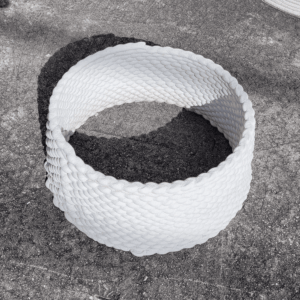
Mastering Strength: A Guide to Testing 3D Printed Ceramic Integrity
Discover how to optimize and evaluate the mechanical performance of 3D printed ceramics for demanding real-world engineering applications. This guide covers testing methods and process adjustments to ensure superior quality.
Published: July 18, 2025 • Original report: 2025-07-15
Ensuring Reliability in Additive Ceramics
The landscape of ceramic fabrication has been fundamentally transformed by the advent of 3D printing. By moving away from traditional subtractive methods toward an additive, layer-wise approach, makers and engineers can now produce geometries previously thought impossible. As the technology matures, moving from niche prototyping into full-scale industrial production, the necessity of rigorous strength testing has become a cornerstone for success.
Ensuring that 3D printed ceramic components meet stringent safety and performance standards is no longer optional. This evolution is fueled by rapid developments in material science and hardware, enabling ceramics to serve critical roles in aerospace, automotive, and biomedical fields. To leverage these advancements, professionals must understand the critical interplay between material selection, printing parameters, and the testing protocols required to validate the structural integrity of final parts.
Key Highlights & Specifications
- Material Advantages: Ceramics are prized for exceptional thermal and chemical stability, alongside high wear and heat resistance.
- Critical Printing Variables: Strength is heavily influenced by layer height, print speed, nozzle temperature, and precise sintering controls.
- Structural Factors: Design elements like wall thickness, specific infill patterns, and geometry directly dictate how parts respond to stress.
- Common Testing Methodologies: Performance is validated through tensile, compression, impact, flexural, and hardness testing.
- Post-Processing: Densification through sintering and surface finishing are essential steps to reduce porosity and mitigate stress concentrations.
The Mechanics of Ceramic Additive Manufacturing
The strength of a ceramic part is a result of the entire fabrication workflow. The process begins with material selection, where factors such as purity, composition, and grain size dictate the base mechanical potential of the object. Once a design is finalized, printing parameters must be balanced; while higher resolution prints typically offer greater detail and strength, they require a meticulous calibration of speed and temperature to ensure optimal inter-layer adhesion.
Following the print, the part undergoes vital post-processing. Because 3D printed green bodies contain inherent porosity, sintering at high temperatures is required to densify the material and achieve its final, durable state. Surface finishing acts as a secondary layer of protection, removing microscopic defects that could otherwise serve as starting points for structural failure.
Validating Performance for Industry Applications
While traditional manufacturing like injection molding often produces more uniform material properties, modern 3D printing is rapidly closing the gap. When parameters are properly optimized, the strength of 3D printed ceramics can match or even exceed that of traditionally manufactured counterparts, all while maintaining the freedom of complex geometry.
To confirm this performance, engineers utilize a battery of tests: tensile testing measures resistance to pulling forces, while compression testing evaluates structural capacity under crushing loads. Furthermore, impact and flexural testing allow designers to assess how a part will handle dynamic shocks or bending stress. By analyzing these data points, makers can iteratively refine their designs, ensuring that printed ceramic components are not only aesthetic but also robust enough for the most demanding high-stress environments.