Lithoz 3D Prints Aluminium Nitride Heat Exchangers for Aviation
Lithoz is leveraging its LCM ceramic 3D printing technology to develop aluminium nitride heat exchangers for megawatt-class hydrogen aircraft as part of the EU-funded TRIATHLON project. This innovation eliminates cryogenic pumps and improves thermal efficiency in sustainable aviation.
Published: September 13, 2025 • Original report: 2025-09-10

Revolutionizing Hydrogen Powertrains Through Advanced Ceramic Additive Manufacturing
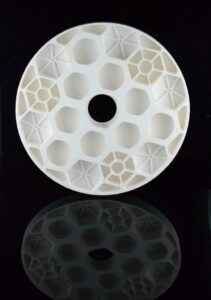
Lithoz is spearheading a major leap forward in sustainable aviation as a key participant in the EU-funded TRIATHLON project. By utilizing advanced Lithography-based Ceramic Manufacturing (LCM) technology, the company is manufacturing 3D-printed aluminium nitride (AlN) heat exchangers designed to manage thermal control in megawatt-class hydrogen-electric aircraft. This groundbreaking application plays a critical role in decarbonizing aviation, offering improved system efficiency, enhanced sustainability, and massive cost savings on maintenance.
Designed by Ergon Research under the Horizon Europe Research and Innovation Action programme (Project No 101138960)—coordinated jointly by TU Delft and M2i—these ceramic heat exchangers replace conventional configurations to eliminate the need for energy-intensive cryogenic hydrogen pumps. Aluminium nitride was selected for its exceptional thermal expansion coefficient and outstanding thermal conductivity of 211 W/mK, making it an ideal material to handle the rigorous thermal demands of next-generation electrified propulsion systems while maintaining a compact, lightweight architecture.
Key Highlights & Specifications
- Core Material: Aluminium nitride (AlN), chosen for high thermal conductivity (211 W/mK) and stable behavior against hydrogen at temperatures below 600°C.
- Manufacturing Technology: Lithography-based Ceramic Manufacturing (LCM) utilizing Lithoz CeraFab System printers.
- Application: Thermodynamics-driven thermal control management for megawatt-class hydrogen and electrified aviation powertrains.
- Project Partnership: Developed alongside Ergon Research as part of the EU-funded TRIATHLON project (Horizon Europe RIA, Grant No 101138960), coordinated by TU Delft and M2i with a six-country consortium.
- Key Benefits: Elimination of cryogenic hydrogen pumps, enhanced thermal efficiency, lighter system weight, reduced maintenance requirements, and substantial cost savings.
How the Technology Operates: Material Extrusion and Workflow
The production of these intricate aerospace components relies heavily on Lithoz’s proprietary LCM technology, which harnesses photopolymerization to shape high-performance technical ceramics with extreme precision. The workflow begins with specialized ceramic slurries—such as LithaFlux 211 Aluminum Nitride—which are selectively cured layer-by-layer using high-resolution WQXGA projection systems integrated into platforms like the CeraFab System S65.
This additive manufacturing approach provides unprecedented design freedom, allowing engineers to fabricate complex internal cooling channels and geometry-optimized structures that would be impossible to achieve through traditional manufacturing methods. Following the printing process, the green parts undergo debinding and sintering to achieve the final dense, high-strength ceramic components capable of withstanding extreme aerospace operating conditions.
Why It Matters for Ceramic & Clay 3D Printing
This milestone project highlights the broader industrial maturation of ceramic additive manufacturing, moving far beyond artistic ceramics and traditional clay 3D printing into high-stress, high-performance engineering fields. For ceramic artists, architects, and industrial makers, the TRIATHLON initiative demonstrates how advanced ceramic materials can solve real-world thermodynamic challenges in heavy industry.
By proving that 3D-printed technical ceramics like aluminium nitride can successfully scale into serial production for aerospace and hydrogen-electric systems, Lithoz validates the unmatched geometrical complexity and functional reliability of ceramic AM. This opens new horizons for leveraging ceramic printing techniques across diverse sectors demanding extreme thermal resistance, structural integrity, and innovative fluid dynamics.